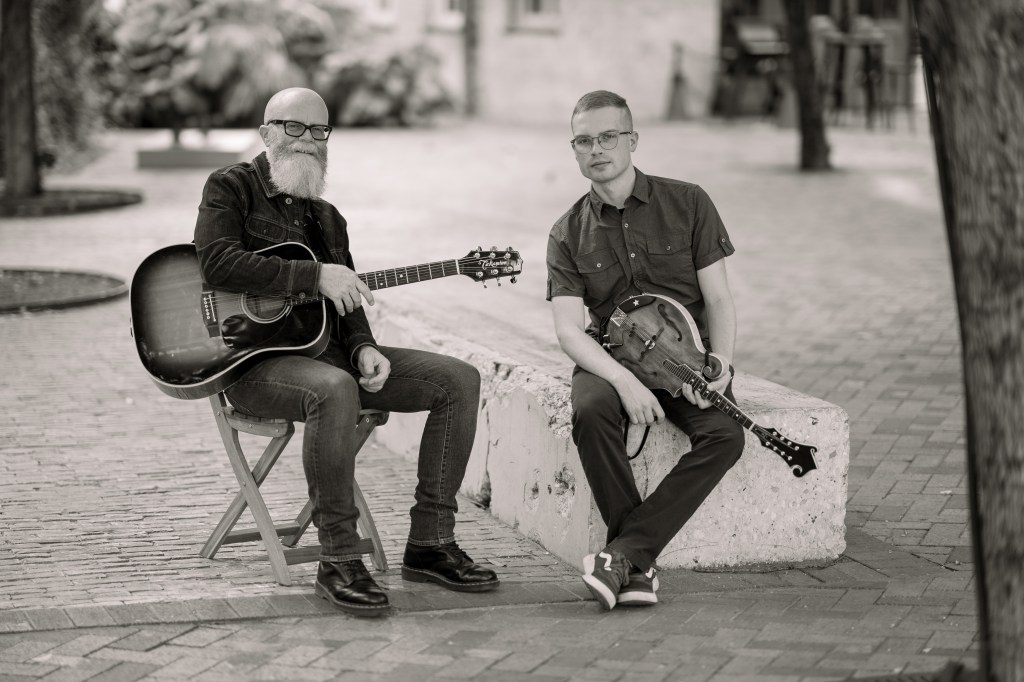
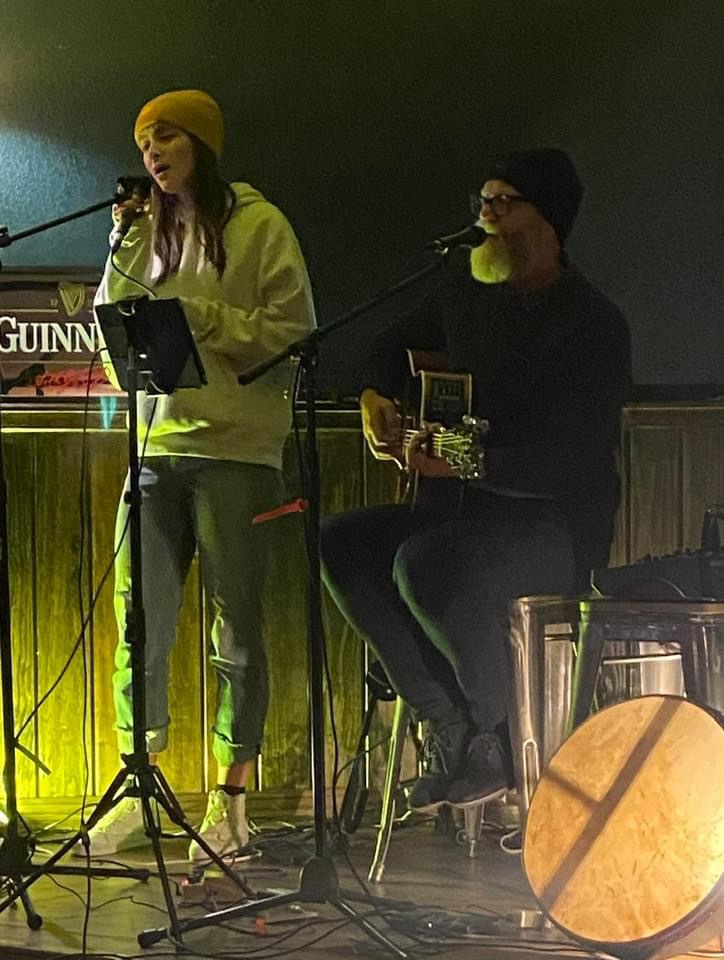
You can find me most Fridays at the Cottage Irish Pub on Broadway & Pershing in San Antonio. I take the stage at 6pm. If you’re lucky, Charlie Merk may turn up with his mandolin & tenor guitar. When we are together we are “Dublin, Oh!” because of our hometowns of Dublin, IRL and Cincinnati, OH.
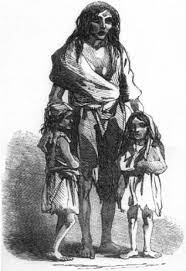
If you have ever visited Ireland, the odds are slim you escaped the island without hearing this song at least once (if not ten times). Written in 1979 by Pete St. John, it entered deep into the Irish consciousness of the late 70s, alongside J.R. and the Southfork crowd. Most Irish know the chorus by heart, but may not be familiar with the verses. The song tells the tragic story of Michael and Mary, a fictional couple with young children, trying to survive the great Irish famine of the mid-19th century. Weaving in history, St. John tells the story of Lord Trevelyan’s commission to feed the Irish with imported corn, rationed corn, that could not overcome the wave of hunger. Many times the corn stores were raided by people trying to survive. In the opening verse of the song, we already know that Michael has been caught trying to steal corn. The penalty if caught in this case, is banishment to the great southern penal colony of Australia.
By a lonely prison wall, I heard a young girl calling, “Michael, they are taking you away. For you stole Trevelyan’s corn, so the young would see the morn. Now a prison ship lies waiting in the bay.”
The Great Famine would see one million starve and one million leave the island. I’m convinced that people who carry Irish blood, carry with it the memory of that trauma, and their way of grieving it is to find beauty in such horror through songs like this. Hibernians (what the Roman’s called us) will joke about just anything, but there is one thing I have noticed that seems off limits; An Gora Mor.
Through taking classes at the Old Town School of folk in Chicago in 1993, I learned finger picking techniques. The school is famous for teaching different arrangements of them. I took that training and applied it to this song. My mother had bought me a song book, and this was the first one I picked from it. I sang it to the kids when they were young. Now, my daughter Finn, a woman (who currently works at my local pub, the Cottage) will join me on stage to sing it; two surviving seeds from the Connaught soil hardest hit. It’s tempting for me to just plow through the song out of boredom, because it’s my most played song. This year marks 30 years of playing it, but the advantage of playing it in south Texas every week is that someone is walking into the pub and coming across the gem for the first time.
My musical palate was formed by Ric Ocasek, Jean Michel Jarre, Icehouse, Midnight Oil and U2’s early 1990s rebirth. The video jukebox at the Horse Show House had no traditional Irish music that I can recall, and we were fine with that. The background sound of “Hydilly Dydilly music” wasn’t helping anyone get a girl. It wasn’t until my arrival in Chicago in 1990 that I’d be immersed in traditional music. The homesickness caused me to hang out in Molly Malones, Costellos and the Goal Post (pronounced “posht” by half of the crowd who went there, who seemed to all be from Belmullet). Often the traditional music was played by a person on keyboard with a beatbox. My head was full of Achtung Baby and sounds of Manchester and I put up with this other sound so I could be with my tribe.
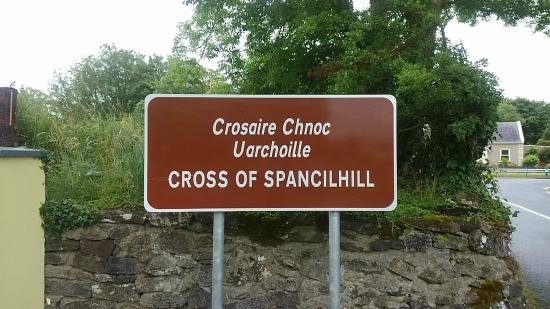
It was at Costellos where I met a girl who asked if I could sing. “I think so,” I said. “Try,” she said. So I did. I sang MLK by U2. “You sound great. You need to keep singing. Do you play an instrument?” she asked. “No. I’m too old to start now,” I said. I was 23 at the time. She laughed. I never saw her again. That may be when I tapped Al Tinley on the shoulder and signed up at Old Town School of Folk. Being limited to an acoustic guitar and the weekly submersion to American folks may have been the trigger to re-look at Irish folk. I heard a guy at the Goal Posht play Spancil Hill one night. I had heard it growing up but was now hearing it anew. I went home and started to play it. Fortunately it was easy.
It’s a song with no chorus, so not a singalonger. It’s the story of a homesick Irishman, living in California, perhaps during the gold rush, dreaming of coming home but never able to. The song has a droning sound that sits on an Am foundation. I’ve been playing it the same way for 30 years and had become bored with it. I recently searched for a way to refurbish it, and came across a young Irishman on YouTube who taught me how to play it in Celtic tuning (DADGAD). 
I’ve reworked the song and I’m excited to play it this Saturday night. Unfortunately, the recording here is the original and not the refurbished version. If you’re tuning in from outside, I’ll switch on Facebook live.
 Brian Ralph